
Fertility Tests & Diagnosis Medically reviewed
How Long Should You Try to Conceive Before Seeing a Fertility Doctor?
Learn how long you should try to conceive before seeing a fertility doctor. Understand how age, health conditions and your fertility history can affect when you should seek help.
To be decided
To be decided
Reviewed by To be decided
Why Do Doctors Say 12 Months?
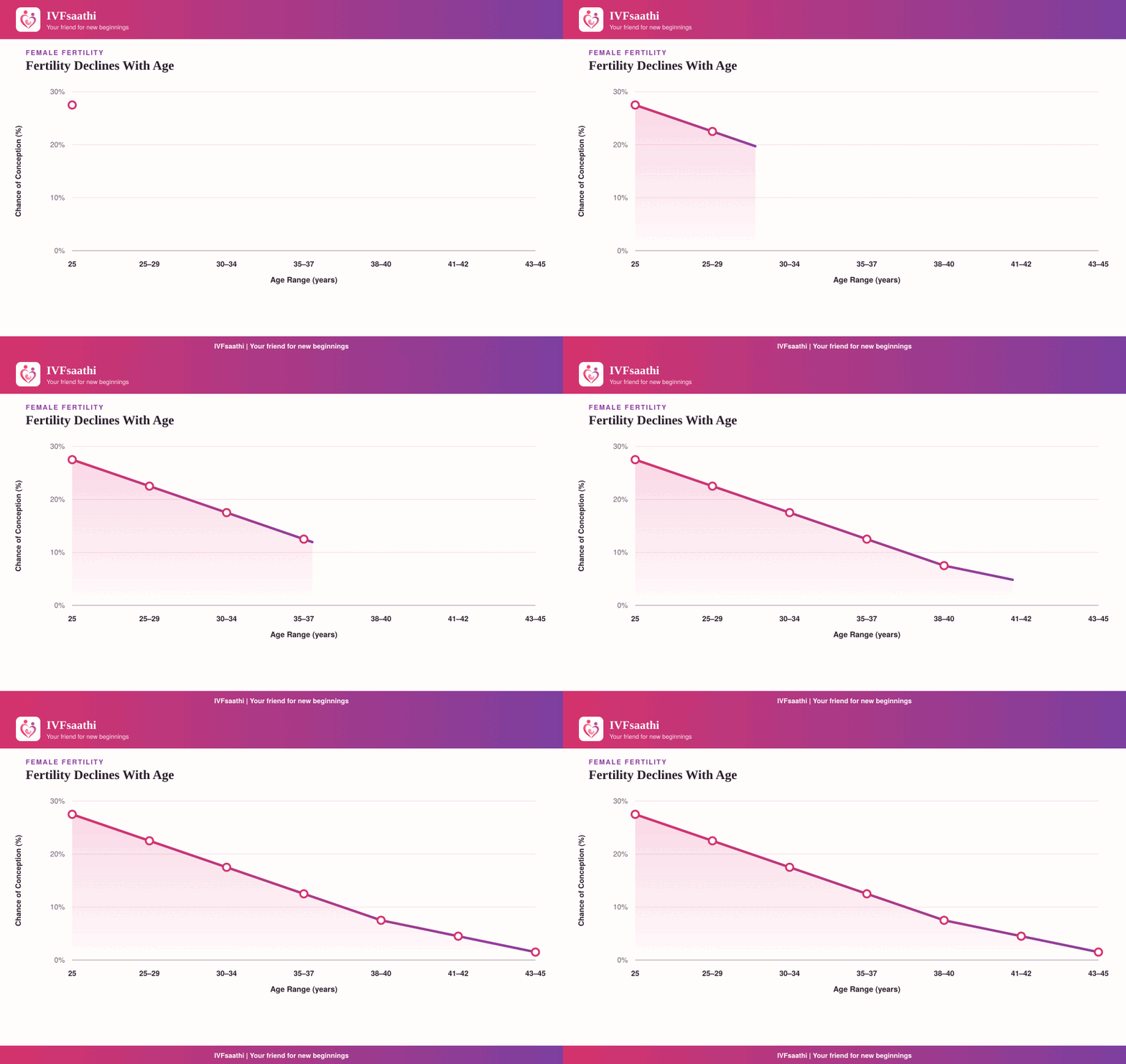
- If you are under 35: Doctors generally recommend seeing a fertility doctor after 12 months of regular, unprotected sex without pregnancy.
- If you are 35 or older: It is usually recommended to seek medical advice after 6 months of trying.
- If you are over 40: It is better to speak to a doctor without waiting for 6 or 12 months.
- If you have irregular periods, PCOS, endometriosis, or another condition that may affect fertility: You may need to see a doctor sooner, even if you have not been trying for 6 or 12 months.
Not getting pregnant after a few months does not automatically mean that you or your partner have a fertility problem.
For many couples, getting pregnant naturally can take several months.
The World Health Organization (WHO) generally defines infertility as not becoming pregnant after 12 months or more of regular, unprotected sex.
But 12 months is not a deadline that means something is suddenly wrong on the 13th month. It is a point at which it makes sense to stop waiting and get your fertility checked.
And you are not alone. WHO estimates that around 1 in 6 people of reproductive age worldwide experience infertility at some point in their lives.
So, if you have been trying for a year without success, getting checked is not an overreaction. It is simply the next step.
Why Does Age Change the Timeline?
Age is one of the biggest factors that doctors consider when deciding how long you should try before getting help.
For women, fertility gradually decreases with age. The number and quality of eggs also decline, and this decline becomes more noticeable after the age of 35.
That is why the American Society for Reproductive Medicine (ASRM) recommends a fertility evaluation after 6 months of trying for women aged 35 and older, rather than waiting for a full year.
For example, imagine you are 36 years old and have been trying for 7 months.
If you were under 35, you might have been told to try for another few months. But because you are over 35, it is a good time to speak to a doctor now.
Getting checked does not mean you will need IVF or fertility treatment. It simply helps you understand whether there is any reason you are not getting pregnant and what your options are.
When Should You See a Doctor Without Waiting?
- Irregular or missed periods: This may mean that you are not ovulating regularly.
- Very painful periods: Severe period pain can sometimes be linked to conditions such as endometriosis.
- PCOS: PCOS can affect ovulation and make it harder to get pregnant.
- A previous ectopic pregnancy: This may indicate problems with the fallopian tubes.
- Previous pelvic surgery or pelvic infections: These can sometimes affect the fallopian tubes or other reproductive organs.
- Previous chemotherapy or radiation: Some treatments can affect fertility.
- Known fertility problems: If you or your partner already know about a condition that can affect fertility, it is better to speak to a doctor early.
Fertility Is Not Only a Woman's Issue
When a couple is unable to get pregnant, people often assume that the problem must be with the woman.
That is not true.
Fertility problems can affect a male and a female both. Sometimes the reason is related to the woman, sometimes the man, and sometimes both partners.
That is why doctors usually recommend checking both partners.
For men, one of the first tests may be a semen analysis. It checks the number of sperm, how well they move and their shape.
This is a simple test and can help doctors understand whether there may be a male fertility factor.
So, if you have been trying for a while, both partners should be part of the conversation, rather than putting all the pressure on the woman.
Fertility Is Not Only a Woman's Timeline
But remember, getting checked does not mean you will be diagnosed with a serious problem or need IVF. Your first appointment is usually about understanding your health and deciding whether any tests are needed.
Seeing a fertility doctor does not mean you have to stop trying naturally. You can discuss your options with the doctor and continue trying while the initial evaluation is being done, depending on your situation.
Age can affect fertility, so getting an early assessment can help you understand your options and make decisions without losing valuable time.
A fertility consultation is not a commitment to treatment. It is simply a way to understand where you stand, what may be affecting your chances of pregnancy, and what you can do next.
What Actually Happens at Your First Fertility Doctor Visit
If you have never visited a fertility doctor before, you may be worried about what will happen.
The good news is that your first appointment is usually about understanding your situation. It does not automatically mean you will have to undergo IVF or any other treatment.
Frequently Asked Questions
No. It means it is a reasonable time to get checked. Many couples who reach this point still conceive naturally, and many others find a simple, treatable reason once they are evaluated.
This article is general information and does not replace individual medical advice. Please discuss your own situation with a qualified doctor.
Last updated: 9/11/2026
Was this helpful?
Comments (0)
No comments yet — be the first.